Science
True science and pseudoscience
Oxford - Science and TechnologyScience encompasses the systematic study of the structure and behaviour of the physical and natural world through observation and experiment.
Wikipedia - Scientific theoryA scientific theory is an explanation of an aspect of the natural world that can be or that has been repeatedly tested and has corroborating evidence in accordance with the scientific method, using accepted protocols of observation, measurement, and evaluation of results.
Wikipedia - Scientific methodThe scientific method is an empirical method for acquiring knowledge through careful observation, rigorous skepticism, hypothesis testing, and experimental validation.
Brian A. Nosek et al - Scientific Utopia: II. Restructuring Incentives and Practices to Promote Truth Over PublishabilityScientists seek to let reality speak for itself, and contradict their theories about it when those theories are incorrect.
Keywords that characterize science are: observation, experimentation, testability, reproducibility. For example microevolution is the observable variety within a species that can be tested and is therefore scientific. Macroevolution is the unobservable change from one unique life form into another unique life form and is therefore not scientific according to the definition of true science. Macroevolution is not observable, not testable and not reproducible. True scientists seek to "let reality speak for itself". Reality and causality show that specified complexity is only caused by intelligent agents. Against all logic the unprovable philosophy naturalism forces evolutionists to believe it is caused by mindless naturalistic processes, forcing them to use metaphysics.
Laurie Brenner - Why Does a Scientist Need to Be Open-Minded?Science is not just the collection of data and facts about nature. Science involves a method of investigation of nature that allows the discovery of knowledge not previously known. A closed mind has no room for new knowledge.*
Open-mindedness is receptiveness to new ideas. For example intelligent design is an idea fanatically opposed by evolutionists, simply because it opens doors to supernaturalism which overpowers naturalism. According to objectivity in science scientists must aspire to eliminate personal biases, a priori commitments, emotional involvement, etc. According to good science scientists should never narrow their minds to unprovable philosophies, like for example naturalism. But that's of course exactly what naturalists do and what they impose on the rest of the world via their powerful mainstream science organizations.
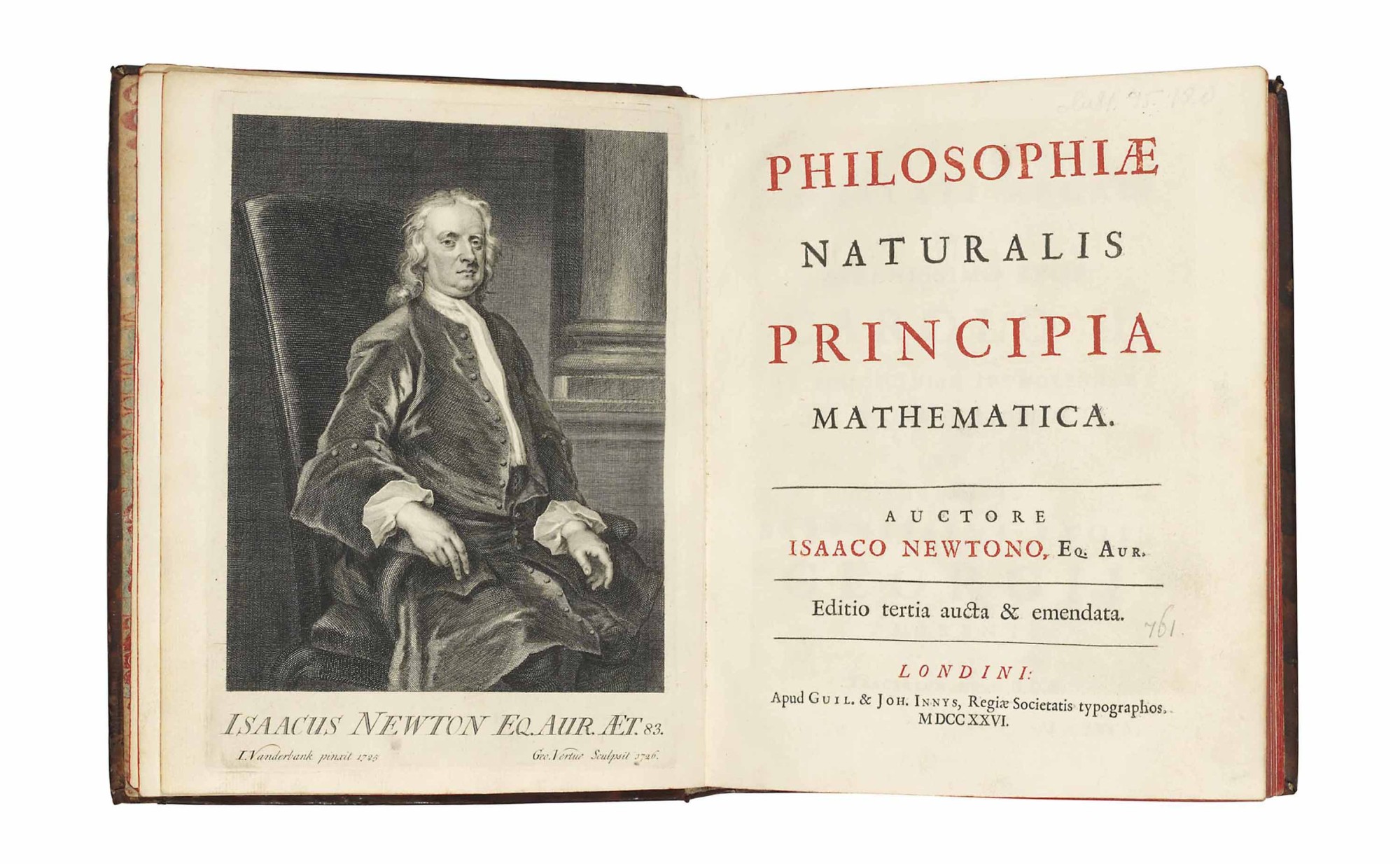
Isaac Newton - Philosophiæ Naturalis Principia MathematicaRule 1: We are to admit no more causes of natural things than such as are both true and sufficient to explain their appearances. Rule 2: Therefore to the same natural effects we must, as far as possible, assign the same causes.
Occam's razor states that among competing hypotheses, the one with the fewest assumptions should be selected. Scientists should not make up far-fetched theories that unnecessarily go beyond what is observable and true. The blind acceptance of the philosophy naturalism makes evolutionists go far beyond the limits of science when trying to explain origins. Examples are the big bang, abiogenesis, macroevolution, uniformitarianism, multiverse, evolutionary psychology, etcetera.
Limits of science
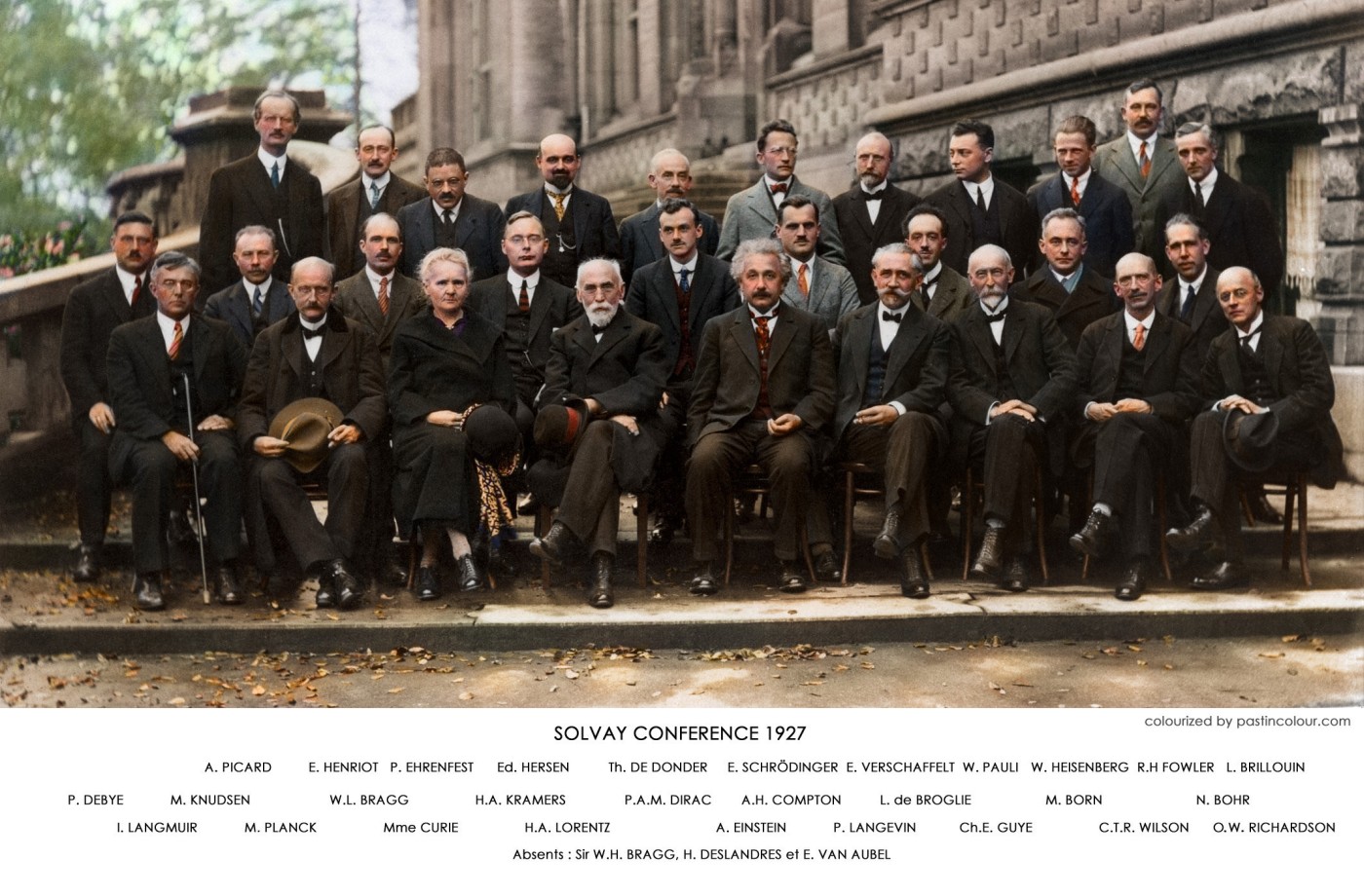
Richard Feynman - The Feynman Lectures on Physics: Atoms in MotionEach piece, or part, of the whole of nature is always merely an approximation to the complete truth, or the complete truth so far as we know it. In fact, everything we know is only some kind of approximation, because we know that we do not know all the laws as yet. Therefore, things must be learned only to be unlearned again or, more likely, to be corrected. ... The test of all knowledge is experiment. Experiment is the sole judge of scientific “truth”.*
Max Planck - Where Is Science Going?Science cannot solve the ultimate mystery of nature. And that is because, in the last analysis, we ourselves are part of nature and therefore part of the mystery that we are trying to solve. ... Anybody who has been seriously engaged in scientific work of any kind realizes that over the entrance to the gates of the temple of science are written the words: Ye must have faith. It is a quality which the scientist cannot dispense with.
Werner Heisenberg - Physics and Philosophy: The Revolution in Modern ScienceThe existing scientific concepts cover always only a very limited part of reality, and the other part that has not yet been understood is infinite.
Albert Einstein - Banesh Hoffman: Albert Einstein: Creator and RebelOne thing I have learned in a long life: That all our science, measured against reality, is primitive and childlike — and yet it is the most precious thing we have.
True scientists know the limits of science. For example water consists of Hydrogen and Oxygen, Hydrogen consists of a proton and an electron, and an electron is an elementary particle. Elementary simply means we don't know of what it is made.
Heisenberg's uncertainty principle shows that absolute knowledge is an illusion to mankind. Reality is much greater than science. True scientists honestly admit that science itself is based on faith, because it is based on certain unprovable axioms or assumptions. Hence the philosophy of science. Because science is limited people are inevitably forced to resort to philosophy. This shows philosophy's superiority over science.
Science cannot prove itself. Science is a product of the human mind but it cannot explain the human mind. That which is created can never exceed or be equal to its creator. A copy can never be better than the original. People can experience love, hate, right, wrong, ethics, beauty, etcetera, but these realities cannot be proven by science. Science can somehow imply that the universe had a beginning but it can't explain what caused the so-called big bang to happen. Questions about origins belong to philosophy, not to science. Every answer in science leads to another question or unknown. Science may be a useful tool for explaining natural phenomena to some extent, but the limits of science are real and should be respected. The supernatural can never be disproven by naturalism, but the supernatural can explain the natural.
Pseudoscience
Charles Darwin - On the Origin of SpeciesTo suppose that the eye, with all its inimitable contrivances for adjusting the focus to different distances, for admitting different amounts of light, and for the correction of spherical and chromatic aberration, could have been formed by natural selection, seems, I freely confess, absurd in the highest possible degree.
Charles Darwin - Letter to Asa Gray (18 June, 1857)I am quite conscious that my speculations run quite beyond the bounds of true science.*
Darwin observed microevolution and presented a theory of unobservable macroevolution based on speculations. The reality is that nobody ever witnessed a life form change into another, nor did anybody observe the appearance of new functional features not already present in the genetic makeup of an existing life form. This is common knowledge. Evolutionists go far beyond the limits of science in order to try to find evidence for their fanatic belief. Testing macroevolution in a laboratory is impossible. Therefore they added incredible amounts of time and invented untestable mathematical theories based on assumptions in an attempt to support their belief. See neo-Darwinism. The foundations of evolution theory are the philosophies naturalism and uniformitarianism.
Scientism
Eugenie Scott - Scientific TheoriesScience ... is really the best way of knowing that we human beings have come up with... for understanding the natural world.
Charles Darwin - The Descent of ManIt has often and confidently been asserted, that man's origin can never be known: but ignorance more frequently begets confidence than does knowledge: it is those who know little, and not those who know much, who so positively assert that this or that problem will never be solved by science.
Evolutionists tend to scientism, the belief that science can prove everything and is the only way to truth and understanding. Like a religion. But science is limited and cannot even prove itself. Some silly popular mainstream evolutionists even make statements likephilosophy is dead,** not understanding that it is a philosophical statement. Such people perhaps know much about their field of science, but they know as good as nothing about the overarching philosophy of science. The philosophy naturalism narrows the mind of its practitioners to a point where they will even deny reality and true science in order to maintain their fanatic belief in it.
Manuel Alfonseca - The myth of progress in the evolution of Science Edward Remler - Number and System Miles Mathis - Celestial Mechanics: Unanswered Questions John Horgan - Science Will Never Explain Why There's Something Rather Than Nothing Ian Hutchinson - A Refutation of Scientism John Lennox - Does Science Require Faith?