Intelligent Design
Mind over matter

Discovery - What is the theory of intelligent design?The theory of intelligent design holds that certain features of the universe and of living things are best explained by an intelligent cause, not an undirected process such as natural selection.*
Intelligent design challenges evolution theory which is based on mindless naturalism. Therefore it is attacked by the powerful world of mainstream science. John Heskett describes design as thehuman nature to shape and make our environment in ways without precedent in nature, to serve our needs and give meaning to our lives.* Everything that doesn't exist in nature naturally was designed by intelligent human beings. Design infers intelligence, not chance.
Mind over matter
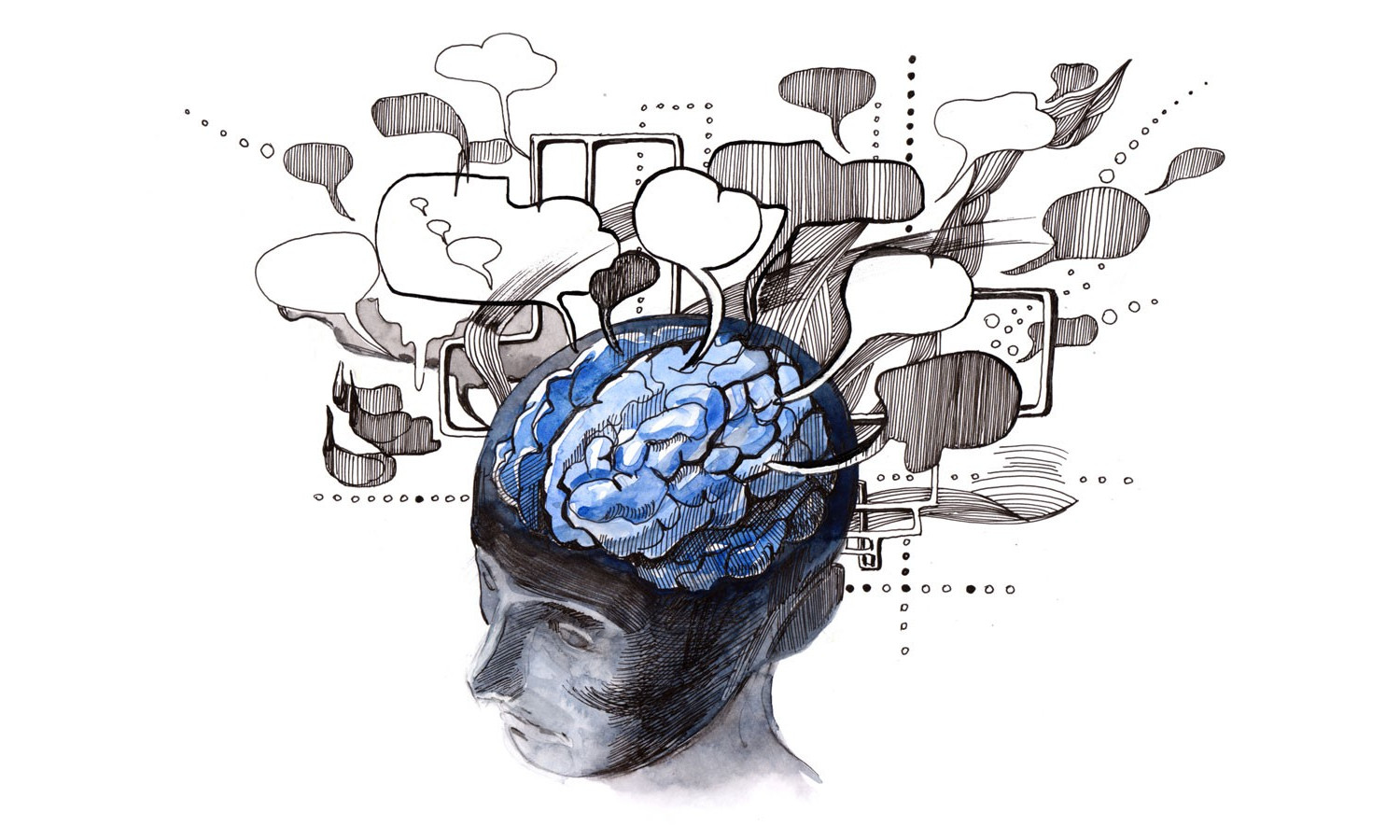
David Barash - The Hardest Problem in Science?How the brain generates awareness, thought, perceptions, emotions, and so forth, what philosophers call “the hard problem of consciousness.” It's a hard one indeed, so hard that despite an immense amount of research attention devoted to neurobiology, and despite great advances in our knowledge, I don't believe we are significantly closer to bridging the gap between that which is physical, anatomical and electro-neurochemical, and what is subjectively experienced by all of us ... or at least by me... But the hard problem of consciousness is so hard that I can't even imagine what kind of empirical findings would satisfactorily solve it.
Latest research suggests that the human brain is made up of around 86 billion neurons, each of which connects to thousands of other neurons.* It is the most complex biological structure on earth. Around 1938 Emerson M. Pugh said:If the human brain were so simple that we could understand it, we would be so simple that we couldn't.** The brain is dynamic and continually changing. Even understanding the much less complex nervous system of a worm is elusive.** This incredibly complex organ popped into existence with the Cambrian Explosion, the relatively short period in history when all known phyla emerged suddenly complete with incredibly complex brains and nervous systems.
James Le Fanu - Why Us? A SynopsisThe implications are clear enough while theoretically it might be possible for neuroscientists to know everything about the physical structure of the brain, its 'product' the mind with its thoughts and ideas, impressions and emotions, would still remain unaccounted for. "We seem as far from understanding the brain as we were a century ago," remarked the editor of Nature John Maddox. "Nobody understands how decisions are made or how imagination is set free."*
The mind is the set of cognitive faculties that enables consciousness, perception, thinking, creation, judgement, and memory. Science itself is a product of the human mind, and therefore it can never fully explain the human mind. The limits of science are real. For example phenomena like the placebo effect or the mind-body problem understate that mind is a mystery to science. For example love, hate, wisdom, faith, right, wrong, etcetera, are real human experiences, but these are not materially based and can never be explained by science.
Monkey science
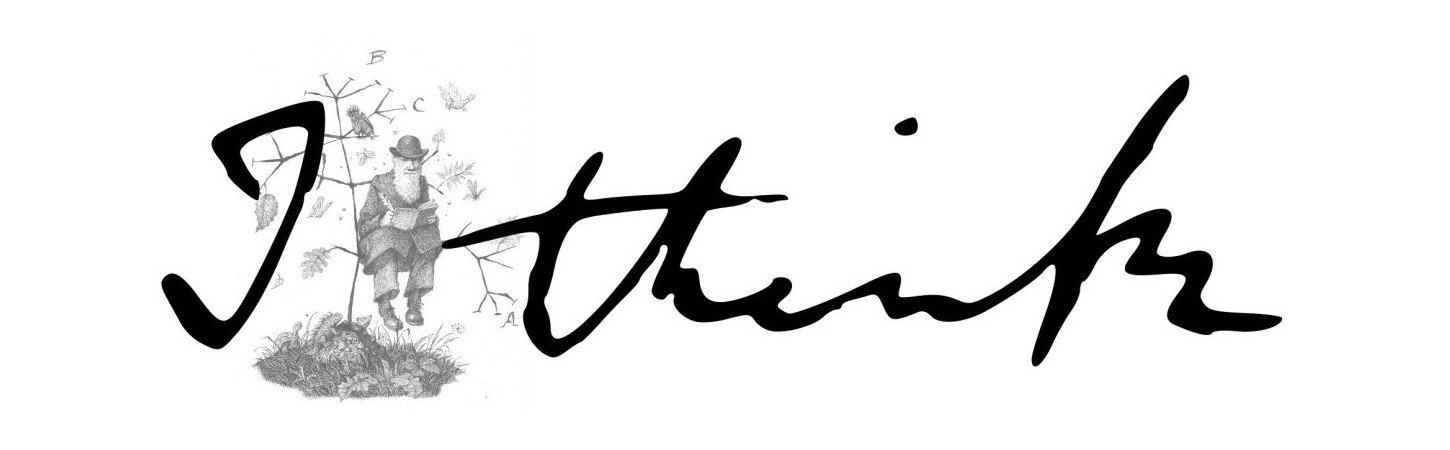
Charles Darwin - Letter to William Graham (3 July 1881)But then with me the horrid doubt always arises whether the convictions of man's mind, which has been developed from the mind of the lower animals, are of any value or at all trustworthy. Would any one trust in the convictions of a monkey's mind, if there are any convictions in such a mind?*
Darwin believed thatthere is no fundamental difference between man and the higher mammals in their mental faculties.* But it is of course well known that the human mind is fundamentally different from that of animals. The human mind is capable of design, creation, art, beauty, right and wrong, past and future, making an agenda, belief, science, morality, law, judgement, etcetera. The difference is enormous. The gap between incredibly complex human language and the very limited set of sounds used by animals is enormous. There are no talking monkeys simply because they don't have the ability to develop a language beyond basic sounds.
Darwin was a bad philosopher who based his conclusions on weak science and much metaphysics. The problems for naturalism with the human mind are striking. This has even led evolutionists to make up a theory called evolutionary psychology by which they view the mind asa set of information-processing machines that were designed by natural selection to solve adaptive problems faced by our hunter-gatherer ancestors.** But those hunter-gatherers were completely human. Darwin wondered whether anyone couldtrust in the convictions of a monkey's mind. But would anyone trust in the convictions of a self-proclaimed monkey descendant's mind?

Richard Dawkins - The Blind WatchmakerBiology is the study of complicated things that give the appearance of having been designed for a purpose. ... natural selection is the blind watchmaker, blind because it does not see ahead, does not plan consequences, has no purpose in view. ... Our brains were designed to understand... What about our own bodies? Each one of us is a machine, like an airliner only much more complicated. Were we designed on a drawing board too, and were our parts assembled by a skilled engineer? The answer is NO.
The analogy of natural selection being a blind watchmaker is hilarious. It's the personification of nature, giving human traits to natural phenomena that aren't human, which is common in religious practices like nature worship where Mother Nature is given creative powers. But of course mindless nature has nothing to do with watchmakers, blind or not. Fanatic evolutionists and atheists like Richard Dawkins like to give mindless natural selection creative powers that are only common to mindful intelligent agents. They attack intelligent design because it doesn't fit with their narrow-minded belief. Ironically, he admits that extra-natural specified complexity exists in life. But even though he can't deny that it is caused by intelligent human beings, he fanatically denies that for example the fine-tuned universe and incredibly complex life, which are way beyond anything ever designed by intelligent humans, were the result of intelligent design, and forces himself to believe it was done by blind chance and mindless natural laws. This is the result of blind faith in the unprovable philosophy naturalism. Hardcore observable reality learns that design requires a designer and creation requires a creator. To believe otherwise is unintelligent to say the least.
Reality

Johannes Kepler - Somnium, seu opus posthumum De astronomia lunari (1608)When things are in order, if the cause of the orderliness cannot be deduced from the motion of the elements or from the composition of matter, it is quite possibly a cause possessing a mind.
Isaac Newton - A short Schem of the true Religion (~1700)Did blind chance know that there was light, and what was its refraction, and fit the eyes of all creatures after the most curious manner to make use of it?*
William Paley - Natural Theology (1809)Suppose I pitched my foot against a stone and were asked how the stone came to be there, I might possibly answer that for anything I knew to the contrary it had lain there forever; ... But suppose I found a watch upon the ground, and it should be inquired how the watch happened to be in that place, I should hardly think of the answer which I had given... when we come to inspect the watch, we perceive ... that its several parts are framed and put together for a purpose, e.g., that they are so formed and adjusted as to produce motion, and that motion so regulated as to point out the hour of the day; that if the different parts had been differently shaped from what they are, or placed in any other manner or in any other order than that in which they are placed, either no motion at all would have carried on in the machine, or none which would have answered the use that is now served by it. This mechanism being observed ... the inference we think is inevitable, that the watch must have had a maker.
Charles Hodge - What is Darwinism? (1874)We recently heard Prof. Joseph Henry, in a brief address, say substantially: "If I take brass, glass, and other materials, and fuse them, the product is a slag. This is what physical laws do. If I take those same materials, and form them into a telescope, that is what mind does." This is the whole question in a nutshell. That design implies an intelligent designer, is a self evident truth. Every man believes it; and no man can practically disbelieve it. Even those naturalists who theoretically deny it, if they find in a cave so simple a thing as a flint arrow-head, are as sure that it was made by a man as they are of their own existence. And yet they want us to believe that an eagle's eye is the product of blind natural causes.

When archaeologists find something as simple as a piece of a pot in the earth they immediately know it was made by intelligent agents. But when an evolutionist has to explain the appearance of all phyla with the Cambrian explosion he is quick to invoke mindless naturalistic processes as the cause. When people find symbols carved on a rock they know they were created by intelligent agents. But when evolutionists are asked to explain how incredibly complex first life and its genetic code came into existence they immediately invoke mindless naturalistic processes. It's the world upside down.
Stephen C. Meyer - Talk of the Times: Intelligent Design vs. EvolutionThe key test is this: show me a process that generates information, and large amounts of specified information, without the guidance of an intelligent agent. ... everything we know is that only intelligence produces information. So test our theories against our knowledge of the cause and effect structure of the world. ... there are some very key things that Darwinian evolution, and in particular chemical evolutionary theory of the origin of first life, cannot and has not explained.*
Regardless of what fanatic evolutionists would like to believe, specified information and complexity are caused by intelligent agents, not by mindless naturalistic processes. This website was intelligently designed to communicate a message to other intelligent human beings. The information is not accidental, but intentional. All characters were carefully placed in a specific order to create a meaningful text that can be understood by other intelligent agents. The chance of getting this website without intelligent intervention is practically zero. The statement of one true scientist or good philosopher is worth much more than the collective statement of a thousand pseudoscientists or bad philosophers from the world of mainstream science who blindly accept the unprovable philosophy naturalism as a fact, a contradiction in terms fanatically defended by extreme nonsense.
Albert Einstein - Letter to Morris Raphael Cohen (19 March 1940)Great spirits have always encountered violent opposition from mediocre minds. The mediocre mind is incapable of understanding the man who refuses to bow blindly to conventional prejudices and chooses instead to express his opinions courageously and honestly.*