Chromosome 2
Monkey CONfusion
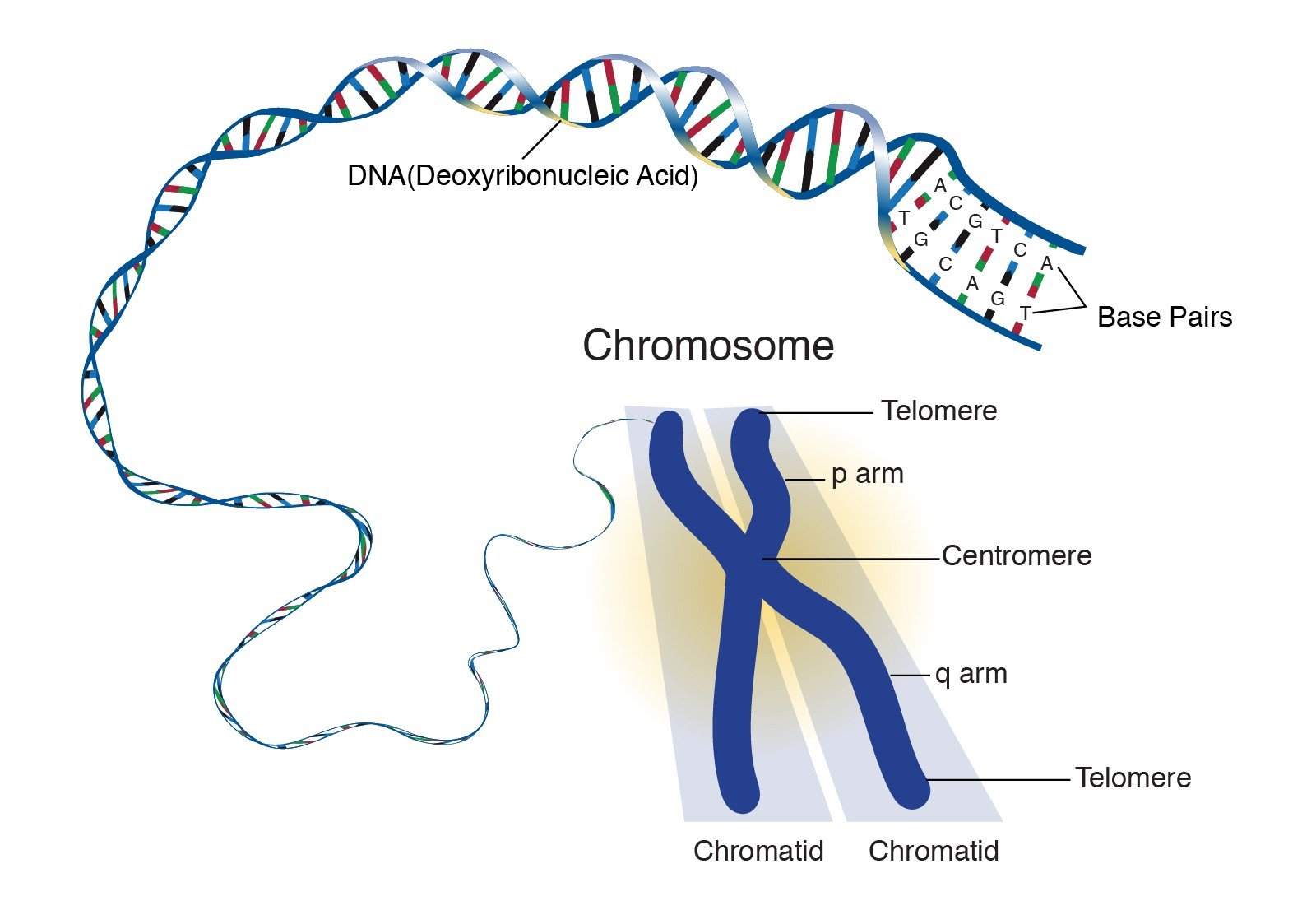
A chromosome is a package of DNA containing part or all of the genetic material of a life form, a complex three-dimensional structure that has a significant role in DNA to RNA transcription. Chromosomes are copied and connected via a centromere before cell division. Human cells have 23 pairs of chromosomes (22 pairs of autosomes and one pair of sex chromosomes), giving a total of 46 per cell. Chromosomes are all located inside the cell nucleus. Next to that each cell also contains mitochondrial DNA which creates the proteins which play a role in cellular energy conversion.
Evolutionary view
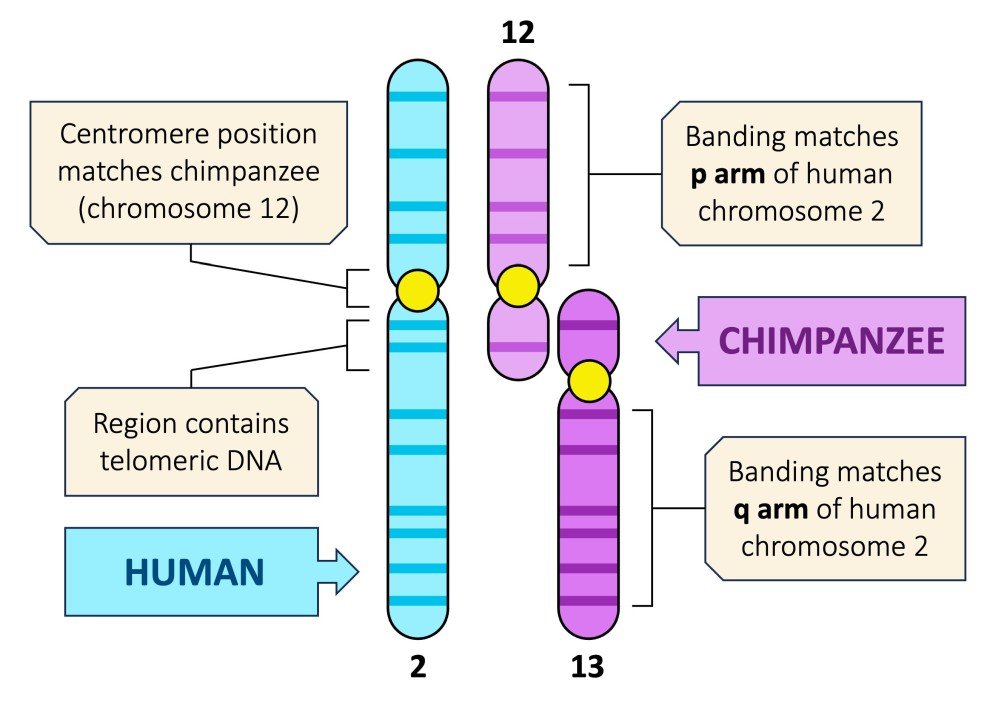 Wikipedia - Chromosome 2Chromosome 2 is one of the 23 pairs of chromosomes in humans. All members of Hominidae except humans have 24 pairs of chromosomes. Humans have only 23 pairs of chromosomes. Human chromosome 2 is widely accepted to be a result of an end-to-end fusion of two ancestral chromosomes. The evidence for this includes:*
- The correspondence of chromosome 2 to two ape chromosomes.
- The presence of a vestigial centromere. ... remnants of a second centromere.
- The presence of vestigial telomeres. ... additional telomere sequences in the middle.
Chromosome 2 presents very strong evidence in favour of the common descent of humans and other apes.
J. W. IJdo et al - Origin of human chromosome 2: An ancestral telomere-telomere fusionWe conclude that the locus cloned in cosmids c8.1 and c29B is the relic of an ancient telomere-telomere fusion and marks the point at which two ancestral ape chromosomes fused to give rise to human chromosome 2.
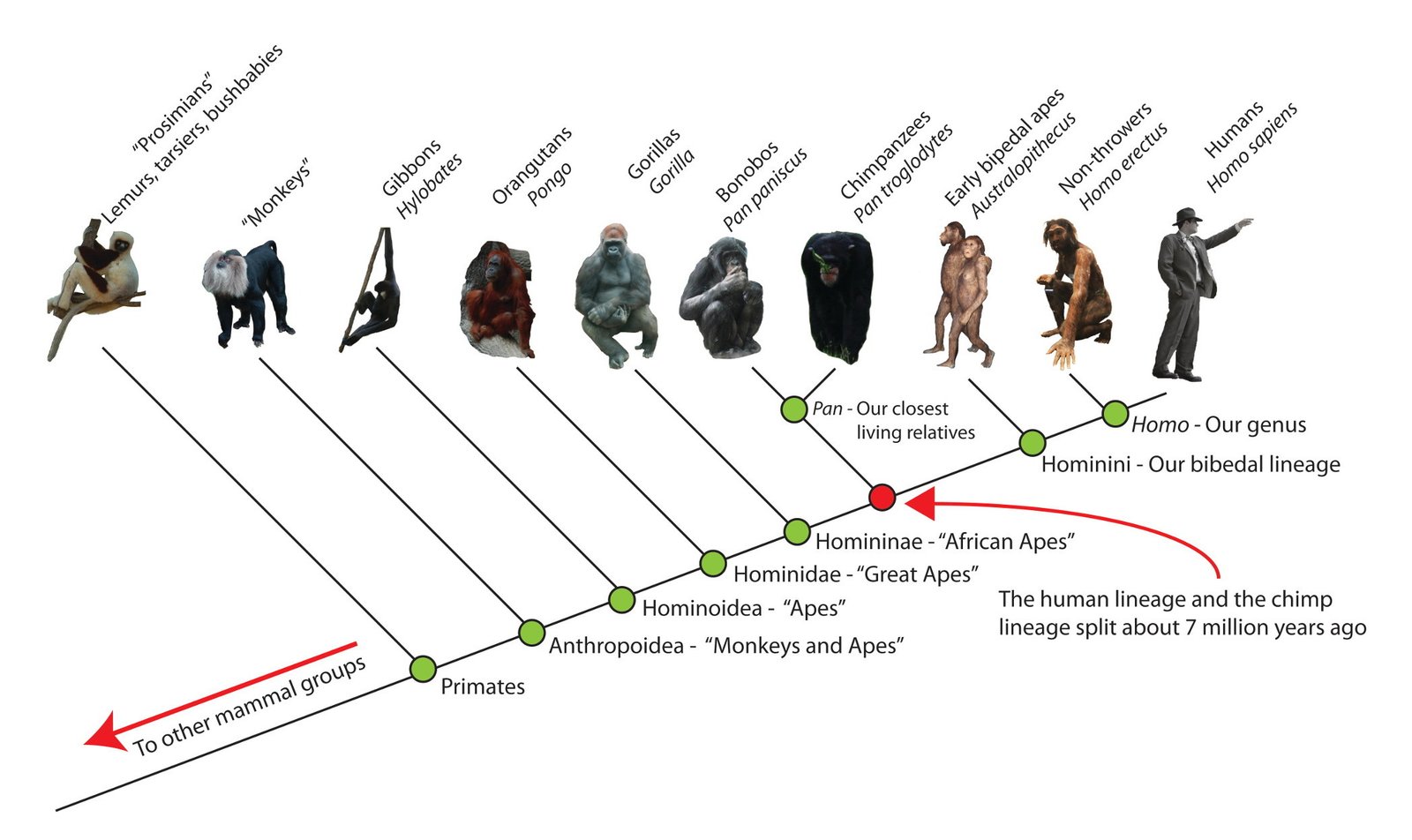
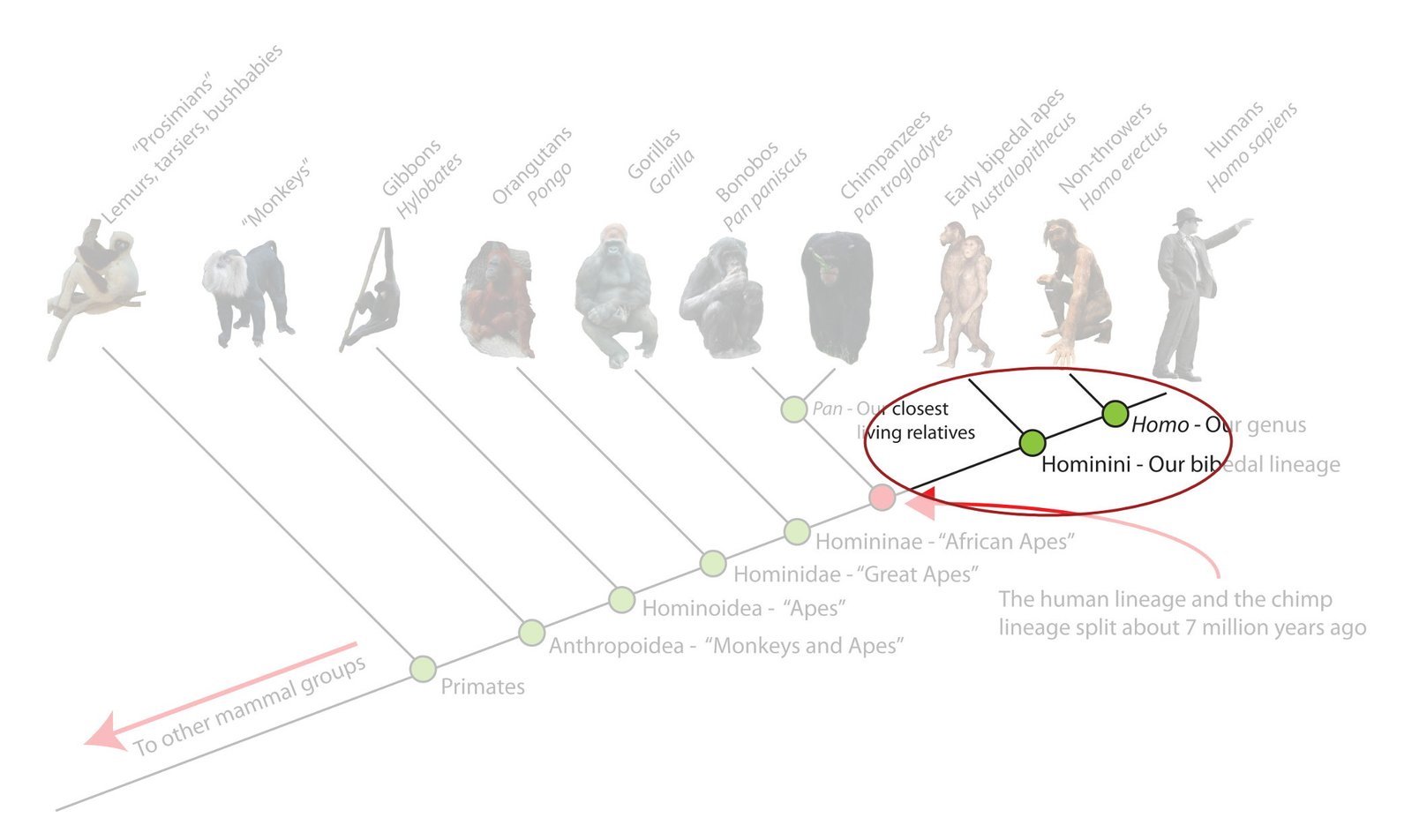
Yuxin Fan et al - Genomic Structure and Evolution of the Ancestral Chromosome Fusion Site...Humans have 46 chromosomes, whereas chimpanzee, gorilla, and orangutan have 48. This major karyotypic difference was caused by the fusion of two ancestral chromosomes to form human chromosome 2 and subsequent inactivation of one of the two original centromeres. ... Because the fused chromosome is unique to humans and is fixed, the fusion must have occurred after the human-chimpanzee split, but before modern humans spread around the world, that is, between ~6 and ~1 million years ago. ...
1. Given the many instances of degenerate telomeric arrays within the subtelomeric regions of human chromosomes, the chromosomes joined at interstitial arrays near, but not actually at, their ends. In this case, material from the very ends of the fusion partners would have been discarded.
2. The arrays were originally true terminal arrays that degenerated rapidly after the fusion. This high rate of change is plausible, given the remarkably high allelic variation observed at the fusion site. The arrays in the BAC and the sequence obtained by IJdo et al. differ by 12%, which is high even if some differences are ascribed to experimental error.
3. Some array degeneracy could be a consequence of sequencing errors.
Human chromosome 2 is thought to be a telomere-telomere fusion. The conclusion that chromosome 2 is so-calledvery strong evidencefor common ancestry relies heavily on the conclusion of the research by J. W. IJdo et al which was published in October 1991. But is that "very strong conclusion" justified? Does a fused human chromosome necessarily imply that "two ancestral ape chromosomes fused to give rise to human chromosome 2"?
Evolutionary researchers usually start their line of reasoning by assuming that common ancestry is true. From that evolutionary standpoint they draw their conclusions. But apparently the fusion happened after the imagined split with chimpanzees. Therefore of course it can never offer direct evidence for any relationship with ancestors of any kind. The evolutionary researchers then offer three possible explanations. But did they offer all possibilities?
Within the human lineage
Casey Luskin - Confusing Evidence for Common Ancestry With Evidence for Darwinian EvolutionIf we step outside the Darwinian box, then the following scenario becomes possible: (1) The human lineage arose separately from that of apes with 48 chromosomes; (2) A chromosomal-fusion event occurred, and (3) The trait spread throughout the human population. In such a scenario, the evidence would appear precisely as we find it, without any common ancestry between humans and apes.*
Evolutionary researchers draw biased conclusions because of their preconceived belief in macroevolution beforehand. Thus they omit crucial conclusions that do not line up with the evolutionary paradigm. This is how they give the impression that it is evidence for common ancestry while in reality it might just as well be explained without it.
Wikipedia - Chromosomal polymorphismChromosomal polymorphism is a condition where one species contains members with varying chromosome counts or shapes. Polymorphism is a general concept in biology where more than one version of a trait is present in a population. In some cases of differing counts, the difference in chromosome counts is the result of a single chromosome undergoing fission, where it splits into two smaller chromosomes, or two undergoing fusion, where two chromosomes join to form one. This condition has been detected in many species. ... In one instance it has been found in a human.
Intelligent Design 101Evidence for chromosomal fusion in humans simply indicates that, at some point within our human lineage, two chromosomes became fused. This tells us nothing about whether we share a common ancestor with apes.
Casey Luskin - What the Literature Says about Chromosomal Fusion and Why It Says ItIt's not unusual to find interstitial telomeric sequences that have nothing to do with fusion events, there are good reasons to question them. Thus, a fourth possible explanation that the authors do not consider is that this is not a fusion site, and there was no chromosomal fusion.*
Evolutionists hammer on the fusion of two ape chromosomes to form one human chromosome. But it is common knowledge that fusion is a phenomenon which happens within a lineage. So it most probably happened within the human lineage. It can therefore never be regarded as direct evidence for common ancestry. If at all, chromosomal fusion is evidence of chromosomal fusion.
Degeneration
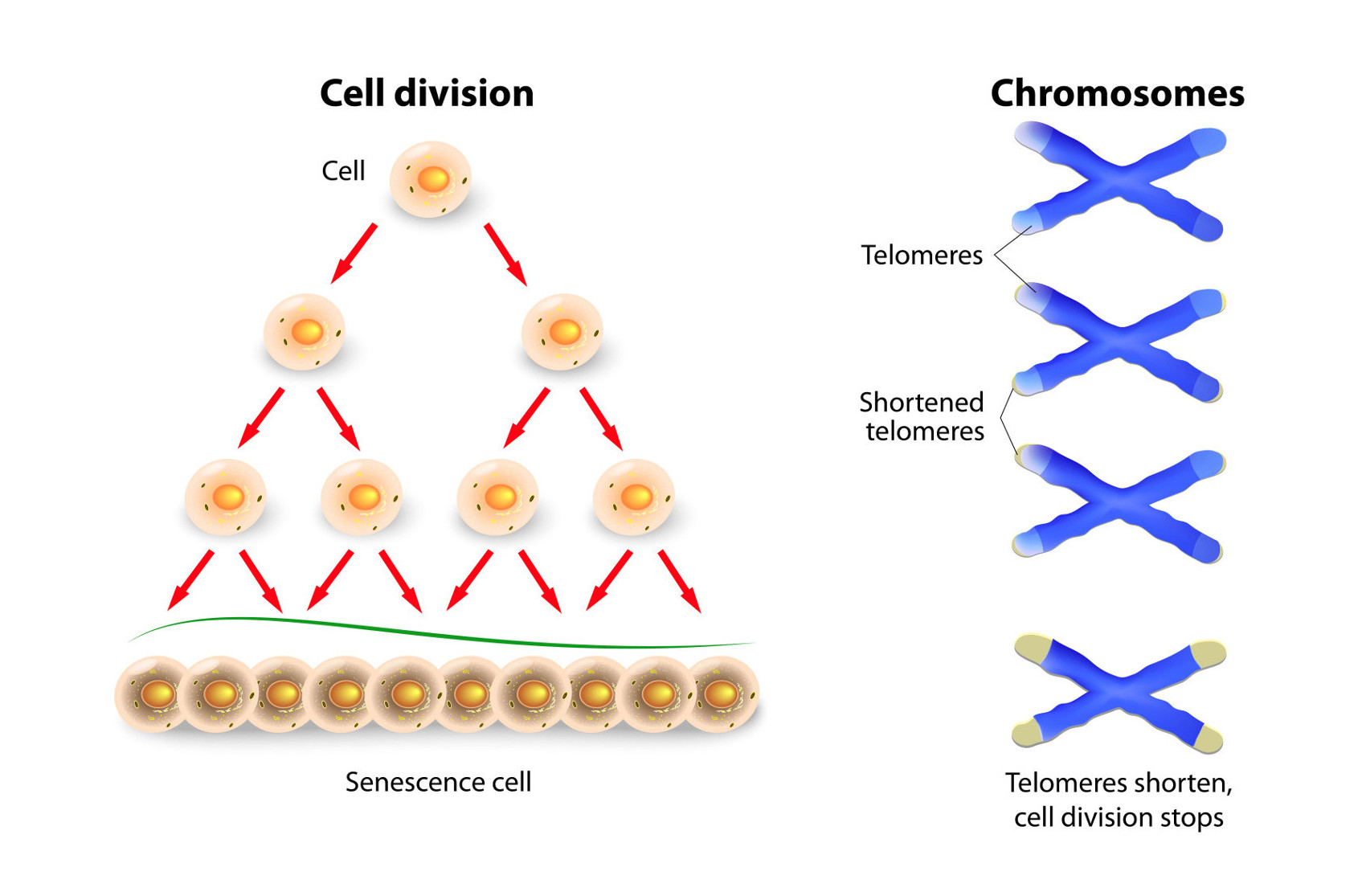
NHGRI - TelomereA telomere is a region of repetitive DNA sequences at the end of a chromosome. Telomeres protect the ends of chromosomes from becoming frayed or tangled. Each time a cell divides, the telomeres become slightly shorter. Eventually, they become so short that the cell can no longer divide successfully, and the cell dies.*
Wikipedia - TelomereShortened telomeres impair immune function that might also increase cancer susceptibility. If telomeres become too short, they have the potential to unfold from their presumed closed structure. The cell may detect this uncapping as DNA damage and then either stop growing, enter cellular old age (senescence), or begin programmed cell self-destruction (apoptosis) depending on the cell's genetic background (p53 status). Uncapped telomeres also result in chromosomal fusions. Since this damage cannot be repaired in normal somatic cells, the cell may even go into apoptosis. Many aging-related diseases are linked to shortened telomeres.
Susan M. Bailey, John P. Murnane - Telomeres, chromosome instability and cancerTelomeres serve multiple functions in preserving chromosome stability, including protecting the ends of chromosomes from degradation and preventing chromosomal end fusion. ... Loss of telomere function is an important mechanism for the chromosome instability commonly found in cancer.
Rebecca Capper et al - The nature of telomere fusion and a definition of the critical telomere length in human cellsThe loss of telomere function can result in telomeric fusion events that lead to the types of genomic rearrangements, such as nonreciprocal translocations, that typify early-stage carcinogenesis.
Each cell division shortens the telomeres until it creates dysfunctional telomeres. This can then lead to chromosomal fusion. Telomeres prevent chromosome fusion from happening because fusion is not beneficial.* Short telomeres are linked to premature ageing and all kinds of diseases, including cancer.**
Evolutionists would like to believe that chromosome 2 fusion is a step in ape to human macroevolution. If at all it happened, then it is more likely that it happened in the human lineage. And if chromosomal fusion happened, it was probably not beneficial to the human species, leading to all kinds of cancer as is common nowadays. In reality it would make more sense to see it as evolution in the wrong direction, namely degeneration.