After death
From Sheol to heaven
John 3:16 (TS2009)
For Elohim so loved the world that He gave His only brought-forth Son, so that everyone who believes in Him should not perish but possess everlasting life.
What happens after death?
Sheol, Hades

Psalm 30:3 (TS2009)
YHWH, You brought me up from She’ol; You have kept me alive, from going down into the pit.
According to the Old Testament all people who died, good and bad, went to a place awaiting judgement in the time of the end. That place is called Sheol in the Hebrew Old Testament or Hades in the Greek New Testament. In Luke 16 the Messiah explained Sheol with the parable of the rich man and the poor beggar...
Luke 16:22-26 (TS2009)
And it came to be that the beggar died, and was carried by the messengers to the bosom of Abraham. And the rich man also died and was buried. And while suffering tortures in She’ol, having lifted up his eyes, he saw Abraham far away, and El‛azar in his bosom. And crying out he said, ‘Father Abraham, have compassion on me, and send El‛azar to dip the tip of his finger in water and cool my tongue, for I am suffering in this flame.’ But Abraham said, ‘Son, remember that in your life you received your good, and likewise El‛azar the evil, but now he is comforted and you are suffering. And besides all this, between us and you a great chasm has been set, so that those who wish to pass from here to you are unable, nor do those from there pass to us.’
In Sheol there are two places, one is a place of rest reserved for God's people, also called the bosom of Abraham, and the other is a place of torture reserved for ungodly people, also called Gehenna (Mark 9:45).
Heart of the earth
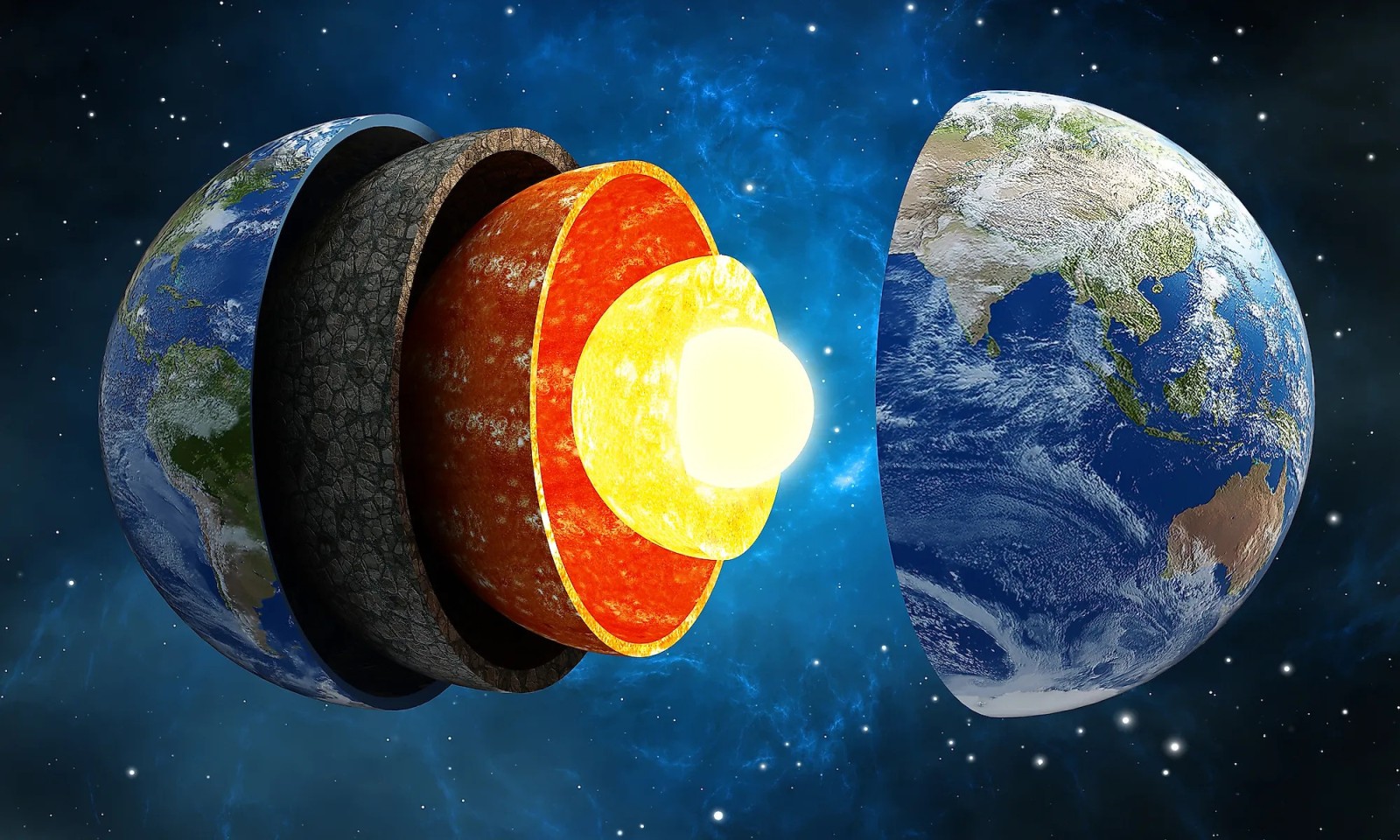
Matthew 12:40
Then some of the scribes and Pharisees answered, saying, “Teacher, we wish to see a sign from You.” But He answering, said to them, “A wicked and adulterous generation seeks after a sign, and no sign shall be given to it except the sign of the prophet Yonah. For as Yonah was three days and three nights in the stomach of the great fish, so shall the Son of Adam be three days and three nights in the heart of the earth. “Men of Ninewĕh shall stand up in the judgment with this generation and condemn it, because they repented at the preaching of Yonah, and look, a greater than Yonah is here.
1 Corinthians 15:3b-4
... that Messiah died for our sins according to the Scriptures, and that He was buried, and that He was raised the third day, according to the Scriptures,
It was commonly understood from the Old Testament that people would go to Sheol after death. The Messiah points to His death and resurrection after three days. He also confirms the location of Sheol as being the heart of the earth. But I think we cannot simply assume that He literally went down to the heart of the earth for three days between His earthly death and resurrection...
Paradise
The word "paradise" is used in total 3 times in the Scriptures, all in the New Testament. What is paradise?
Luke 23:43 according to The Scriptures 2009 reads...
Luke 23:43 (TS2009)
And YHWSO said to him, “Truly, I say to you today, you shall be with Me in paradise.”
Luke 23:43 according to The English Standard Version reads...
Luke 23:43 (ESV)
And he said to him, “Truly, I say to you, today you will be with me in paradise.”
In the Hebrew and Greek Scriptures there are no commas, these commas have been added by translators depending on the context or their interpretation of the Scriptures. Luke 23:43 has a comma which, depending on its place in the sentence, can change the meaning of what the Messiah said. People often allude to ancient Greek and complex explanations involving the Greek language. But does the Word of God really need all these extra-biblical explanations to make sense? The phraseI say to you today, with or without comma, appears in total only 1 time in the Scriptures (ESV). The phraseI say to youappears in total around 96 times in the Scriptures (ESV). The typical phraseTruly I say to you, with or without comma, appears in total around 72 times in the Scriptures (ESV) of which all appear in the Gospels and all were typically said by the Messiah. So the Messiah never used a word like "today" anywhere else in Scriptures in combination with the phrase "I say to you". Obviously, the word "today" doesn't add any meaning to "I say to you". Would the Messiah use an additional meaningless word like "today" in this particular case while we know that nowhere else He did? The Messiah knew that He and the man next to Him would die that same day. So it is more likely that the word "today" belongs after the comma.
2 Corinthians 5:17
Therefore, if anyone is in Messiah, he is a renewed creature – the old matters have passed away, see, all matters have become renewed!
After His death the Son of God didn't go to Sheol or Hades, He went to paradise. And the criminal next to Him who repented and would be saved because of his belief would also go to paradise with Him. Both criminals died after the Messiah (John 19:32-33). This clearly shows that the death of the Messiah changes what happens to God's people after death. They no longer go to Sheol or Hades, but to paradise. According to Paul...
2 Corinthians 12:2-4 (TS2009)
I know a man in Messiah who fourteen years ago – whether in the body I do not know, or whether out of the body I do not know, Elohim knows – such a one was caught up to the third heaven. And I know such a man – whether in the body or out of the body I do not know, Elohim knows – that he was caught up into paradise and heard unspeakable words, which it is not right for a man to speak.
Since the death of the Messiah God's people no longer go down to Sheol, but they are caught up into paradise or the third heaven. There are several heavens above the earth (1 Kings 8:23), there is a heaven of heavens (2 Chronicles 2:6, Nehemiah 9:6) and God looks down on the heavens (Psalms 113:4-6).
Revelation 2:7 (TS2009)
He who has an ear, let him hear what the Spirit says to the assemblies. To him who overcomes I shall give to eat from the tree of life, which is in the midst of the paradise of Elohim.” ’
This confirms that God's people will go to paradise in heaven after death. Peter further explained...
Acts 2:24-32 (TS2009)
Him Elohim raised up, having loosed the pangs of death, because it was impossible that He could be held in its grip. For Dawid says concerning Him, ‘I saw YHWH before me continually, because He is at my right hand, in order that I should not be shaken. ‘For this reason my heart rejoiced, and my tongue was glad, and now my flesh shall also rest in expectation, because You shall not leave my being in She’ol, nor shall You give Your Lovingly-committed One to see corruption. ‘You have made known to me the ways of life, You shall fill me with joy in Your presence.’ Men and brothers, let me speak boldly to you of the ancestor Dawid, that he died and was buried, and his tomb is with us to this day. Being a prophet, then, and knowing that Elohim had sworn with an oath to him: of the fruit of his loins, according to the flesh, to raise up the Messiah to sit on his throne, foreseeing this he spoke concerning the resurrection of the Messiah, that His being was neither left in She’ol, nor did His flesh see corruption. Elohim has raised up this YHWSO, of which we are all witnesses.
King David went to the bosom of Abraham in Sheol after his death, just like all of God's people who died before the Messiah. David understood that the Messiah would overcome death and would be spared from Sheol and taken by God to sit at His right hand (Psalms 110:1, Mark 16:19).
