Quran
Not so perfect after all...
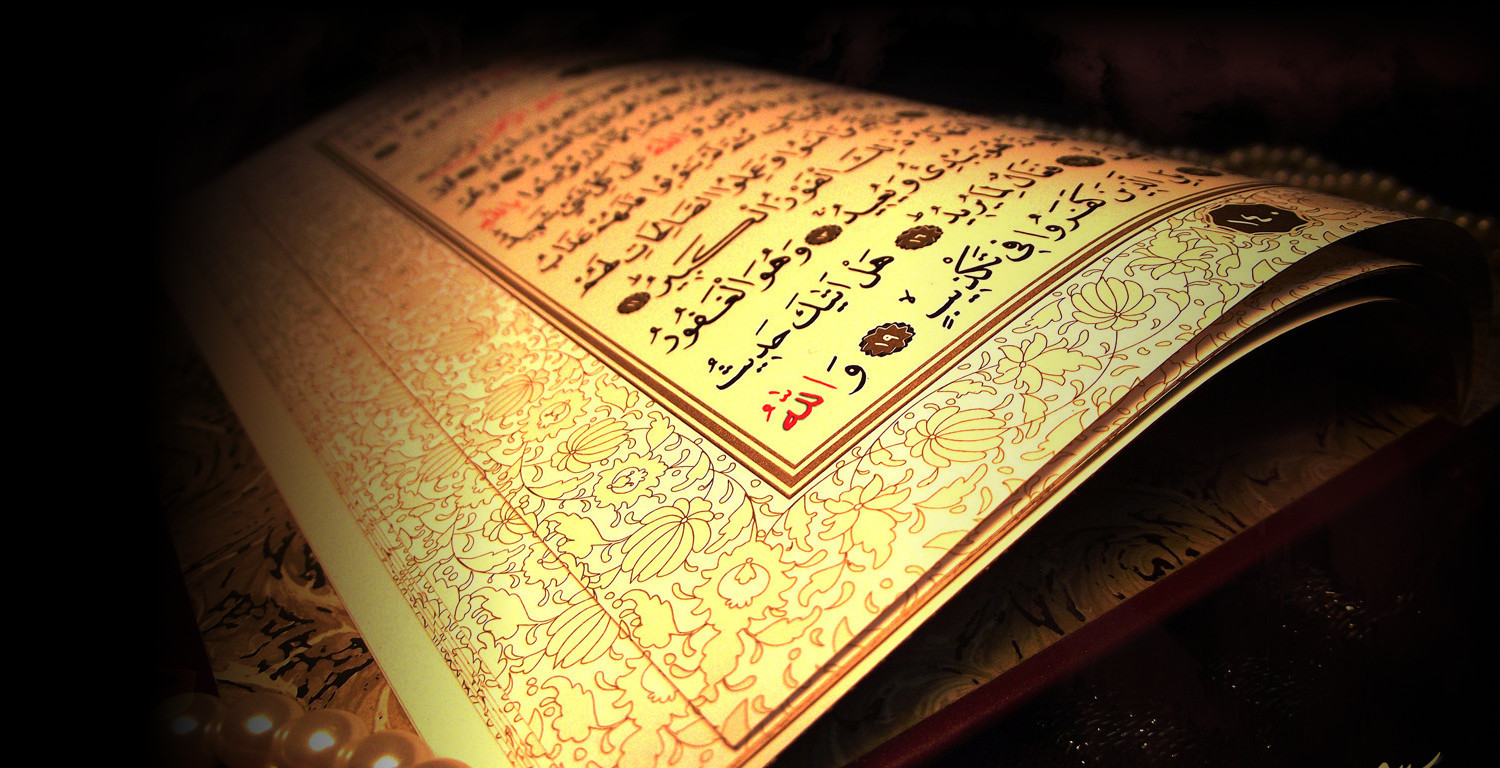
Quran 11:1b˹This is˺ a Book whose verses are well perfected and then fully explained. ˹It is˺ from the One ˹Who is˺ All-Wise, All-Aware.
The Quran is the central religious text of Islam, which Muslims believe to be a revelation from God. Muslims believe that the Quran was verbally revealed by God to Muhammad through the angel Gabriel. In Quran 6:38 it says:We have left nothing out of the Record.The Quran says about itself that it is complete and perfect. If the Quran were complete and perfect it should not contain any errors or contradictions. But is it complete and perfect?
Quran vs. Scriptures
Quran 5:46-47Then in the footsteps of the prophets, We sent Jesus, son of Mary, confirming the Torah revealed before him. And We gave him the Gospel containing guidance and light and confirming what was revealed in the Torah—a guide and a lesson to the God-fearing. So let the people of the Gospel judge by what Allah has revealed in it. And those who do not judge by what Allah has revealed are ˹truly˺ the rebellious.
The Quran refers to the Torah and the Gospel and says these books are inspired. Muslims believe that the Torah, Psalms and Gospel are inspired by God.** The Torah is also called the Pentateuch and it consists of the first 5 books of the Old Testament, largely attributed to Moses: Genesis, Exodus, Leviticus, Numbers and Deuteronomy. But there are substantial differences and contradictions between the Scriptures and the Quran, they can't both be true. Therefore Muslims believe the Scriptures are either corrupted or misinterpreted...
Wikipedia - TahrifTahrif or corruption of the Bible, is a term used by most Muslims to refer to believed alterations made to the previous revelations of God—specifically those that make up the Torah, Psalms, and the Gospel. The term can also refer to what Muslims consider to be the corrupted Jewish and Christian interpretations of the previous revelations of God. This concept holds that earlier revelations have been misinterpreted rather than textually altered.*
Muslim scholars do not agree whether the Scriptures have been textually altered or only misinterpreted. Some verses in the Quran talk about "distortion" of the Scriptures. For example Quran 3:78 states:There are some among them who distort the Book with their tongues, but distortion "with the tongue" does not neccessarily imply that the writings are distorted. It rather means that the explanation or interpretation is distorted. Quran 5:13 states:They distorted the words of the Scripture, but again this does not neccessarily imply distortion of the written text. Either Muslims believe that "almighty" Allah was not able to prevent humans from textually altering his inspired word, showing that their Allah is not almighty, or they are forced to explain the meaning of the inspired Scriptures in a way that they fit with their Quran, which is impossible. The disagreement between Muslims already shows that they have no evidence except their own interpretations which makes them the ones who distort the Scriptures to seemingly fit with their Quran.
Isaiah 40:8 (TS2009)Grass shall wither, the flower shall fade, but the Word of our Elohim stands forever.
God is clear, His Word stands forever and is never corrupted by human hands, as can be expected from the one and only Almighty God. The Dead Sea Scrolls that were discovered during the 20th century contain the original Hebrew and Greek copies of the Scriptures. They contain God's Name, YHWH, and prove that the main text of the Old and New Testament was not altered significantly until now. Although translations of the original Hebrew and Greek into different modern languages can result in somewhat different meanings, they can be compared to the original Hebrew and Greek texts.
Compilation of the Quran
Huda - Who Wrote the Quran and When?Although the Prophet Muhammad himself could neither read nor write, he dictated the verses orally and instructed scribes to mark down the revelation on whatever materials were available: tree branches, stones, leather, and bones. The scribes would then read their writing back to the Prophet, who would check it for mistakes. With each new verse that was revealed, the Prophet Muhammad also dictated its placement within the growing body of text. When the Prophet Muhammad died, the Quran has been fully written down. It was not in book form, however. It was recorded on different parchments and materials, held in the possession of the Companions of the Prophet. After the death of the Prophet Muhammad, the entire Quran continued to be remembered in the hearts of the early Muslims. Hundreds of the early Companions of the Prophet had memorized the entire revelation, and Muslims daily recited large portions of the text from memory. Many of the early Muslims also had personal written copies of the Quran recorded on various materials. Ten years after the Hijrah (632 C.E.), many of these scribes and early Muslim devotees were killed in the Battle of Yamama. While the community mourned the loss of their comrades, they also began to worry about the long-term preservation of the Holy Quran. Recognizing that the words of Allah needed to be collected in one place and preserved, the Caliph Abu Bakr ordered all people who had written pages of the Quran to compile them in one place. The project was organized and supervised by one of the Prophet Muhammad's key scribes, Zayd bin Thabit.*
The Quran was compiled in the most odd way, not a very trustworthy method for compiling such a book. One would expect that Muhammad who got the revelation or inspiration would immediately write down everything, but he was illiterate. As odd as that is, the people to which he dictated the verses didn't write them down immediately, but memorized them or wrote them on whatever was available. Only after Muhammad's death all these scattered verses were compiled into one book. It is not difficult to understand that the result of such a way of working has led to much discussion regarding the chronology and it is impossible to know whether the Quran is complete or whether parts have been lost along the way.
Open to interpretation

Quran 3:7He is the One Who has revealed to you ˹O Prophet˺ the Book, of which some verses are precise—they are the foundation of the Book—while others are elusive. Those with deviant hearts follow the elusive verses seeking ˹to spread˺ doubt through their ˹false˺ interpretations—but none grasps their ˹full˺ meaning except Allah. As for those well-grounded in knowledge, they say, “We believe in this ˹Quran˺—it is all from our Lord.” But none will be mindful ˹of this˺ except people of reason.
The precise order of chapters in the Quran is not known and opinions among Muslim scholars vary.* Not surprisingly, the Quran and many of its verses are open to interpretation and their meaning may vary depending on their order and context. Allah basically expects people to blindly believe in the Quran.
Muqatta'at
Quran 2:1Alif-Lam-Mim.
What does that mean? Nobody knows. These three words are called a "Muqatta'at" which are unique letter combinations that appear in the beginning of 29 chapters of the Quran. Their meanings remain unclear and are considered by most Muslims to be divine secrets. Then the following verse in the Quran reads...
Quran 2:2This is the Book! There is no doubt about it—a guide for those mindful ˹of Allah˺
But the doubt was already in the previous verse in the form of a "muqatta'at". These muqatta'ats also contradict Quran 11:1 which states that all verses in the Quranare well perfected and then fully explained.
Creation days?
Quran 7:54aIndeed your Lord is Allah Who created the heavens and the earth in six Days, then established Himself on the Throne. ...
According to this verse the heavens and the earth were created in 6 days...
Quran 41:9-12Ask ˹them, O Prophet˺, “How can you disbelieve in the One Who created the earth in two Days? And how can you set up equals with Him? That is the Lord of all worlds. He placed on the earth firm mountains, standing high, showered His blessings upon it, and ordained ˹all˺ its means of sustenance—totaling four Days exactly—for all who ask. Then He turned towards the heaven when it was ˹still like˺ smoke, saying to it and to the earth, ‘Submit, willingly or unwillingly.’ They both responded, ‘We submit willingly.’ So He formed the heaven into seven heavens in two Days, assigning to each its mandate. And We adorned the lowest heaven with ˹stars like˺ lamps ˹for beauty˺ and for protection. That is the design of the Almighty, All-Knowing.
This verse mentions 2, 4, and 2 days, but it's not very clear how to interpret the 4 days mentioned. Let's zoom in on verse 10
screenshot
The Clear Quran by Dr. Mustafa Khattab clearly deviates from all other versions. Its footnote states:These four Days include the first two, so the total period of creation is six heavenly Days.The other versions state that the creation of the earth took 2 days and the creation of the mountains and the sustenance took 4 days. The Clear Quran is a new version published in 2015. It was adjusted to fit with the 6 creation days mentioned in other Quran verses in order to explain away the contradiction. So, if we assume that the other versions are the more correct translations from Arabic to English then these verses state that the heavens and the earth were created in 2+4+2 = 8 days which contradicts the 6 days mentioned elsewhere. Now check how a Muslim scholar handled this...
Zakir Naik - Heaven and earth created in 6 or 8 days?
First, this Muslim scholar doesn't say there's a problem with the 4 days mentioned in verse 10, but he believes the issue is with the first word in verse 11 of which all translations agree that it means "then". He says that the word "summa" or "thumma" in verse 11 can mean three things: "then", "moreover", or "simultaneously". He says that in this verse it's supposed to mean "simultaneously" and that the last two days fall within the 6 days of creation mentioned before it so that it agrees with the other Quran verses that give 6 days in total.
According to an Arabic person the word meansafter some time, then (used when talking about a series of events (for example I did this “summa“ that).** Another saysThumma's meaning is "al tarteeb wa al tarakhi". Tarteeb has to do with ordering, so when you say several things, they are ordered one after the other. ... So if I say "Akaltu fa sharibtu", it means I ate then immediately drank. But if I say "Akaltu thumma sharibtu", it means I ate, then after a while, drank.** On the same website someone else says it means:Then, thereupon, afterwords, thereafter, after that, next, later, later on, subsequently, moreover, furthermore, besides.** According to a video called Thumma and its meanings, Part 1 ** the word is about an order of events, not about an event included in a previous event. Muslim scholars make up crazy stories and wild theories to support their fanatic belief in Muhammad who was illiterate and also not very good at counting.
Exodus 20:11 (TS2009)For in six days YHWH made the heavens and the earth, the sea, and all that is in them, and rested the seventh day. Therefore YHWH blessed the Sabbath day and set it apart.
The Quran ignores God's Holy Sabbath, the seventh day of creation. Another clear contradiction.
Idolatry
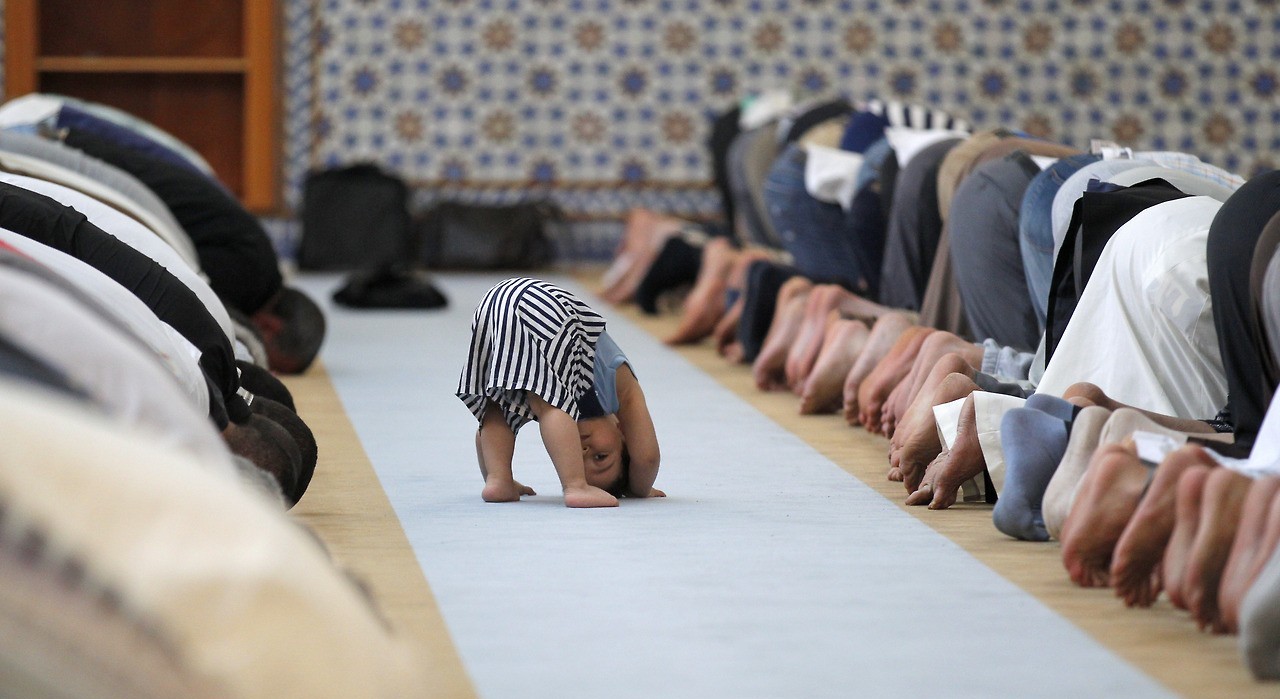
Quran 2:34And ˹remember˺ when We said to the angels, “Prostrate before Adam,” so they all did—but not Iblis, who refused and acted arrogantly, becoming unfaithful.
Here the angels are ordered to "prostrate" before Adam, the created man who would later sin and lead all mankind into corruption and death. To prostrate means to put or throw flat with the face down, as in submission or adoration. Prostrating is an act of worship. Muslims do it several times a day. To prostrate before Adam is idolatry according to the Scriptures which Muslims must believe to be inspired as well. In Surah 2:163 it saysYour God is ˹only˺ One God. There is no god ˹worthy of worship˺ except Him—the Most Compassionate, Most Merciful.This Allah makes angels bow down to Adam, a man, while later on in the same chapter he says that nobody is worthy of worship except himself.
Corruption
Quran 2:30˹Remember˺ when your Lord said to the angels, “I am going to place a successive ˹human˺ authority on earth.” They asked ˹Allah˺, “Will You place in it someone who will spread corruption there and shed blood while we glorify Your praises and proclaim Your holiness?” Allah responded, “I know what you do not know.”
This is about the creation of Adam. Despite the fact that angels couldn't have known yet that Adam would get corrupted in the future, they ask whether Allah will create a creature that will cause corruption on the earth. Allah says he will. According to the Quran itself the corruption and evil in this world are the creation of Allah. In Surah 28:77 it says thatAllah certainly does not like the corruptors. This Allah doesn't like corruption, but he created it.
Abrogation
Quran 2:106If We ever abrogate a verse or cause it to be forgotten, We replace it with a better or similar one. Do you not know that Allah is Most Capable of everything?
Yaqeen Institute for Islamic Research - Abrogated Rulings in the Qur’an: Discerning their Divine WisdomAbrogation in the Qur'an refers to the phenomenon of a later verse changing or altering a ruling established by a verse revealed earlier, either in whole or in part. Later scholars developed diverging technical definitions of abrogation that differed slightly from the linguistic usage of earlier generations, leading to significant disagreements over the nature of abrogation, how many verses were abrogated, and even whether abrogation is a legitimate interpretive mechanism.*
By means of abrogation Muslims try to explain away contradictory verses in the Quran by stating that later verses in the Quran supersede earlier contradictory verses. Muslims regard the Quran to be perfect, but that would mean that its verses cannot be improved, which is apparently not the case. In Quran 2:106 it contradicts itself. Another problem is the fact that nobody knows the exact chronology of the chapters or the verses in the Quran. Which verse came later? Abrogation shows the weakness and fallibility of the imperfect Quran which is in many regards open to interpretation.
Sunnah & Hadith

Sunnah refers to the complete way of life and actions of Muhammad, while Hadith are the written narrations that record his statements and actions. The Hadith are the written books that collect the oral Sunnah. The Hadith were compiled largely in the 10th and 11th centuries, hundreds of years after Muhammad. They are the second most important texts after the Quran and they are regarded as the guidelines for Muslims' way of life. Hadith areregarded as important tools for understanding the Quran.* The idea to have additional texts in order to explain the Quran is of course strange when it claims it is a bookwhose verses are well perfected and then fully explained(Quran 11:1) and which claims to be complete (Quran 6:38). Using imperfect texts written by imperfect beings centuries after Muhammad as an explanation of the Quran is peculiar to say the least. Not so perfect after all.